







Introduction
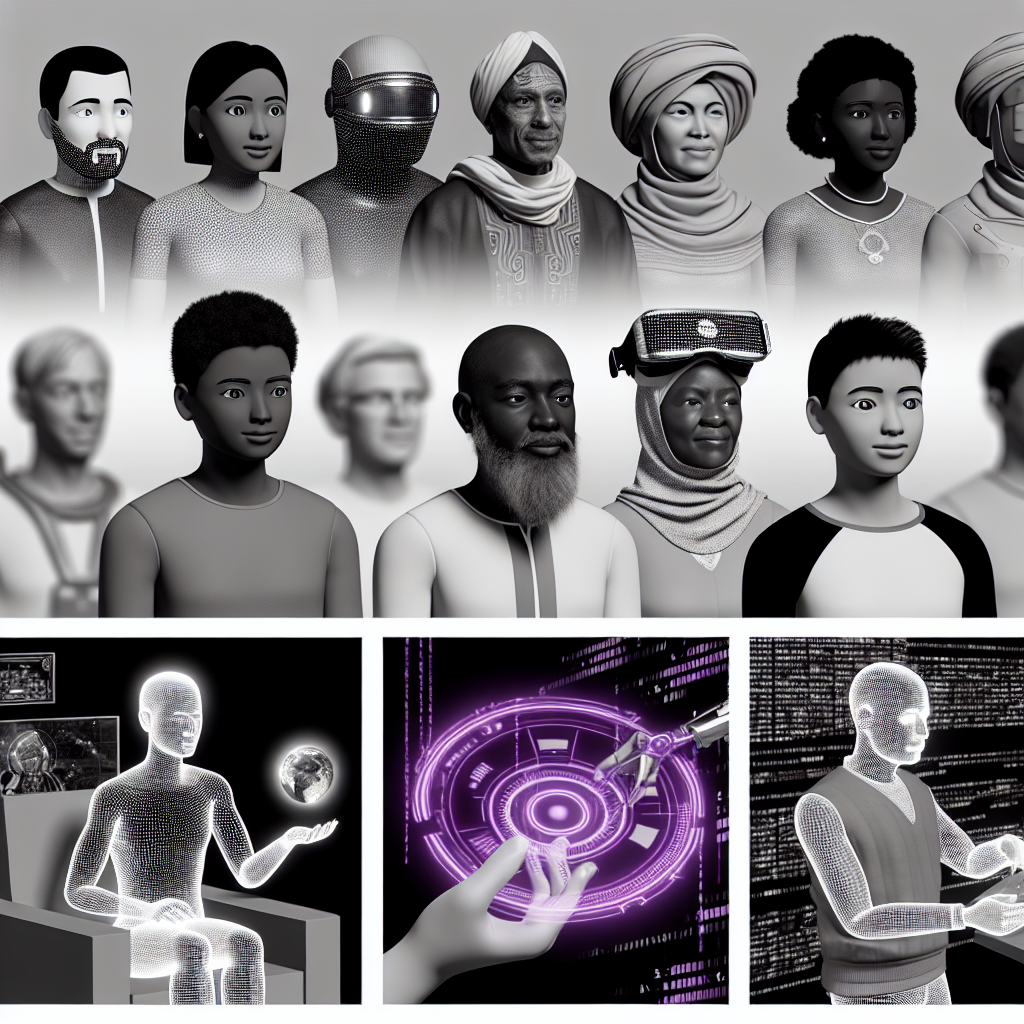
Generative AI is revolutionizing the way we interact with technology, enabling machines to create content that is indistinguishable from human-generated works. From generating images and music to writing articles and programming code, the challenges of utilizing generative AI are as intriguing as they are complex. The primary challenge lies in designing models that not only understand the intricacies of human creativity but can also produce outputs that resonate with human experience.
In this article, we will explore the concepts, techniques, and applications of generative AI. We will discuss various models and methods, compare their effectiveness, and provide practical solutions with code examples. By the end of this article, you will have a comprehensive understanding of generative AI, its challenges, and how to harness its potential.
Understanding Generative AI
Generative AI refers to algorithms that can generate new content based on the data they have been trained on. Unlike discriminative models, which focus on classifying data, generative models learn the underlying distribution of the data to create new instances.
Types of Generative Models
- Generative Adversarial Networks (GANs): Comprise two neural networks — a generator and a discriminator — that work in opposition to create realistic outputs.
- Variational Autoencoders (VAEs): Utilize encoder-decoder architecture to generate new data points by learning the latent representation of the training data.
- Transformers: Originally designed for natural language processing, these models can also generate high-quality text and other data types. A well-known example is OpenAI’s GPT series.
Problem Statement
While generative models offer exciting possibilities, they also come with challenges, such as:
- Quality of generated content
- Mode collapse in GANs
- Training stability
- Ethical considerations regarding the use of generated content
In the sections that follow, we will explore how to tackle these challenges while providing a clear technical foundation.
Step-by-Step Technical Explanation
Basic Concepts of Generative Models
Neural Networks
At the core of generative models lies the neural network architecture. A basic understanding of neural networks is essential. They consist of:
- Input Layer: Receives the input data.
- Hidden Layers: Perform computations and extract features.
- Output Layer: Produces the final output.
Example of a simple neural network in Python using Keras:
python
from keras.models import Sequential
from keras.layers import Dense
model = Sequential()
model.add(Dense(128, input_dim=784, activation=’relu’)) # Input layer
model.add(Dense(64, activation=’relu’)) # Hidden layer
model.add(Dense(10, activation=’softmax’)) # Output layer
model.compile(loss=’categorical_crossentropy’, optimizer=’adam’, metrics=[‘accuracy’])
Loss Functions
Loss functions measure how well the model performs. In generative models, different loss functions are used based on the architecture. For instance:
- GANs: Use adversarial loss functions that pit the generator against the discriminator.
- VAEs: Use a combination of reconstruction loss and Kullback-Leibler divergence.
Advanced Techniques in Generative AI
Generative Adversarial Networks (GANs)
GANs have gained popularity due to their ability to generate high-quality images. A typical GAN consists of:
- Generator: Produces fake data.
- Discriminator: Evaluates the authenticity of the data.
The training process involves:
- The generator tries to create better fakes.
- The discriminator learns to differentiate between real and fake data.
Example of Training a GAN
Below is a simplified implementation of a GAN using TensorFlow:
python
import tensorflow as tf
def build_generator():
model = Sequential()
model.add(Dense(256, input_dim=100, activation=’relu’))
model.add(Dense(512, activation=’relu’))
model.add(Dense(1024, activation=’relu’))
model.add(Dense(28 28 1, activation=’tanh’))
model.add(Reshape((28, 28, 1)))
return model
def build_discriminator():
model = Sequential()
model.add(Flatten(input_shape=(28, 28, 1)))
model.add(Dense(512, activation=’relu’))
model.add(Dense(256, activation=’relu’))
model.add(Dense(1, activation=’sigmoid’))
return model
generator = build_generator()
discriminator = build_discriminator()
discriminator.compile(loss=’binary_crossentropy’, optimizer=’adam’, metrics=[‘accuracy’])
Variational Autoencoders (VAEs)
VAEs introduce a probabilistic twist to the generation process. They consist of an encoder that compresses the input into a latent space and a decoder that reconstructs the data from this representation.
Example of Training a VAE
Here’s a basic VAE implementation:
python
from keras.layers import Input, Dense, Lambda
from keras.models import Model
import keras.backend as K
input_img = Input(shape=(784,))
encoded = Dense(64, activation=’relu’)(input_img)
z_mean = Dense(32)(encoded)
z_log_var = Dense(32)(encoded)
def sampling(args):
z_mean, z_log_var = args
epsilon = K.random_normal(shape=(K.shape(z_mean)[0], 32))
return z_mean + K.exp(0.5 z_log_var) epsilon
z = Lambda(sampling)([z_mean, z_log_var])
decoder_h = Dense(64, activation=’relu’)
decoder_mean = Dense(784, activation=’sigmoid’)
h_decoded = decoder_h(z)
x_decoded_mean = decoder_mean(h_decoded)
vae = Model(input_img, x_decoded_mean)
vae.compile(optimizer=’adam’, loss=’binary_crossentropy’)
Comparisons of Generative Approaches
| Model Type | Strengths | Weaknesses | Use Cases |
|---|---|---|---|
| GANs | High-quality images; effective for creative tasks | Training instability; mode collapse | Image generation, art creation |
| VAEs | Stable training; interpretable latent space | Blurry outputs; less detail compared to GANs | Image reconstruction, anomaly detection |
| Transformers | Strong in sequential data; versatile | Requires large datasets; expensive to train | Text generation, language translation |
Real-World Case Study: Generating Art with GANs
Scenario: An art organization wants to create unique digital art pieces using generative AI.
Solution:
- Data Collection: Gather a dataset of existing artworks.
- Model Selection: Choose a GAN architecture (e.g., StyleGAN).
- Training: Train the GAN on the dataset.
- Output: Generate new artworks.
Implementation:
python
for epoch in range(epochs):
noise = np.random.normal(0, 1, (batch_size, 100))
generated_images = generator.predict(noise)
# Train discriminator

discriminator.train_on_batch(real_images, np.ones((batch_size, 1)))

discriminator.train_on_batch(generated_images, np.zeros((batch_size, 1)))
# Train generator

noise = np.random.normal(0, 1, (batch_size, 100))

gan.train_on_batch(noise, np.ones((batch_size, 1)))
Ethical Considerations
With the rise of generative AI, ethical implications must be addressed, including:
- Deep Fakes: The potential for misuse in creating misleading content.
- Copyright Issues: The challenge of ownership when AI generates content.
- Bias in AI: The risk of perpetuating existing biases in training data.
Conclusion
Generative AI is a powerful tool with the potential to transform industries, from art to music and beyond. By understanding the various models, techniques, and their implications, practitioners can leverage generative AI responsibly and effectively.
Key Takeaways
- Model Selection: Choose the right generative model based on your use case.
- Training Stability: Implement techniques to stabilize training, especially in GANs.
- Ethical Awareness: Be mindful of the ethical implications of using generative AI.
Best Practices
- Always curate your training data to avoid biases.
- Monitor the outputs for quality and ethical considerations.
- Experiment with different architectures to find the best fit for your application.
Useful Resources
-
Libraries:
- TensorFlow: https://www.tensorflow.org
- PyTorch: https://pytorch.org
- Keras: https://keras.io
-
Frameworks:
- OpenAI’s GPT: https://openai.com
- StyleGAN: https://github.com/NVlabs/stylegan
-
Research Papers:
- “Generative Adversarial Nets” by Ian Goodfellow et al.
- “Auto-Encoding Variational Bayes” by D. P. Kingma and M. Welling.
By utilizing these resources, developers can dive deeper into the fascinating world of generative AI and harness its capabilities for innovative applications.