









Introduction
Computer Vision is a fascinating field of artificial intelligence that enables machines to “see” and interpret visual information from the world. It plays a crucial role in various applications, such as facial recognition, autonomous vehicles, medical image analysis, and augmented reality. However, despite its advancements, the field faces significant challenges, including high-dimensional data, variability in visual data, and the need for real-time processing.
In this article, we will explore the core concepts of computer vision, the techniques employed to overcome its challenges, and provide practical solutions with code examples in Python. We’ll also compare different algorithms and frameworks, present real-world case studies, and summarize key takeaways.
The Challenges of Computer Vision
- High-Dimensional Data: Images consist of large amounts of data, making processing and analysis computationally expensive.
- Variability: Images can vary due to lighting conditions, angles, and occlusions, complicating the task of recognition.
- Real-Time Processing: Many applications require immediate responses, necessitating efficient algorithms and hardware.
- Data Quality: The effectiveness of computer vision models heavily relies on the quality and quantity of training data.
Step-by-Step Technical Explanations
1. Basic Concepts of Computer Vision
1.1 What is an Image?
An image is a two-dimensional array of pixels, where each pixel represents a color value. In grayscale images, a pixel value ranges from 0 (black) to 255 (white), while in color images, pixels are often represented in RGB format.
1.2 Image Processing Techniques
Before diving into deep learning, let’s look at some fundamental image processing techniques:
- Filtering: To enhance or modify images (e.g., Gaussian blur for noise reduction).
- Edge Detection: Identifying boundaries within images using algorithms like Canny or Sobel.
- Thresholding: Segmenting images based on intensity values.
2. Advanced Techniques in Computer Vision
2.1 Deep Learning and Convolutional Neural Networks (CNNs)
Deep learning, particularly Convolutional Neural Networks (CNNs), has revolutionized computer vision:
- Convolution Layer: Applies filters to extract features from images.
- Pooling Layer: Reduces dimensionality while retaining essential information.
- Fully Connected Layer: Combines features for classification tasks.
Here’s a simple CNN implementation using TensorFlow/Keras:
python
import tensorflow as tf
from tensorflow.keras import layers, models
model = models.Sequential()
model.add(layers.Conv2D(32, (3, 3), activation=’relu’, input_shape=(64, 64, 3)))
model.add(layers.MaxPooling2D((2, 2)))
model.add(layers.Conv2D(64, (3, 3), activation=’relu’))
model.add(layers.MaxPooling2D((2, 2)))
model.add(layers.Flatten())
model.add(layers.Dense(64, activation=’relu’))
model.add(layers.Dense(10, activation=’softmax’))
model.compile(optimizer=’adam’, loss=’sparse_categorical_crossentropy’, metrics=[‘accuracy’])
3. Practical Solutions
3.1 Object Detection
Object detection involves identifying and localizing objects within an image. Two popular algorithms are YOLO (You Only Look Once) and Faster R-CNN.
Here’s a brief comparison:
| Algorithm | Speed | Accuracy | Complexity |
|---|---|---|---|
| YOLO | Fast | Moderate | Low |
| Faster R-CNN | Slower | High | High |
3.2 Image Segmentation
Image segmentation is the process of partitioning an image into segments to simplify its representation. U-Net is widely used for medical image segmentation.
python
def unet_model(input_size=(128, 128, 1)):
inputs = layers.Input(input_size)
conv1 = layers.Conv2D(16, 3, activation=’relu’, padding=’same’)(inputs)
outputs = layers.Conv2D(1, 1, activation='sigmoid')(conv10)

model = models.Model(inputs=[inputs], outputs=[outputs])

return model
4. Case Studies
4.1 Autonomous Vehicles
Autonomous vehicles rely heavily on computer vision for environment perception. Using CNNs and object detection algorithms, they can identify road signs, pedestrians, and obstacles in real-time.
Hypothetical Implementation:
- Data Collection: Gather labeled images from diverse environments.
- Model Training: Use a CNN for object detection.
- Real-Time Processing: Deploy the model on GPUs for low-latency inference.
4.2 Medical Imaging
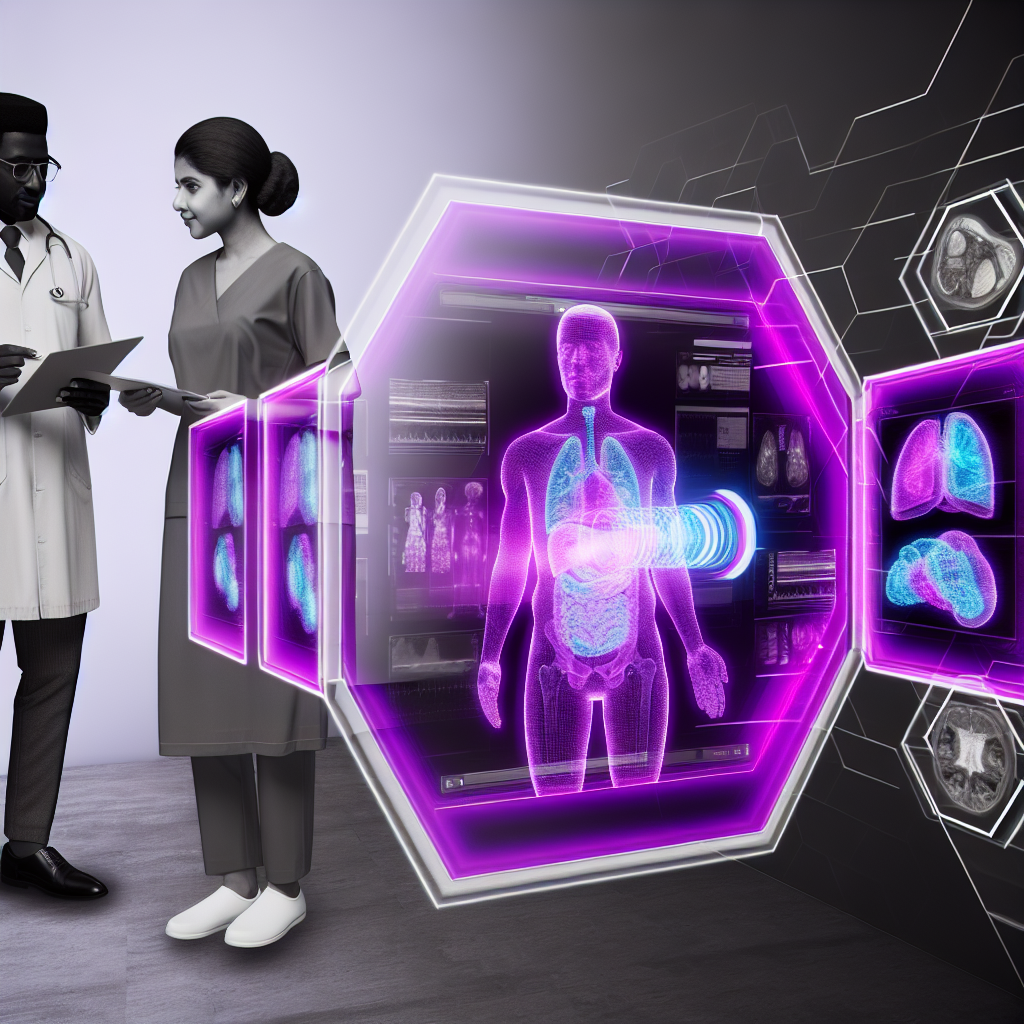
In medical imaging, computer vision aids in diagnosing diseases by analyzing MRI scans or X-rays. For instance, using U-Net for segmentation helps identify tumors.
Implementation Steps:
- Data Preparation: Anonymize and preprocess medical images.
- Model Development: Train a U-Net model to segment tumor regions.
- Evaluation: Validate the model using metrics like Dice Coefficient.
5. Conclusion
Computer vision is a rapidly evolving field with immense potential. By leveraging deep learning techniques, practitioners can tackle complex visual recognition tasks. Here are some key takeaways:
- Start Simple: Begin with basic image processing before diving into advanced techniques.
- Choose the Right Model: Depending on your application, the choice between YOLO and Faster R-CNN can significantly impact performance.
- Data is King: High-quality, diverse datasets are crucial for training robust models.
- Use Transfer Learning: Pre-trained models can accelerate development and improve accuracy.
Useful Resources
-
Libraries:
-
Frameworks:
-
Research Papers:
- “ImageNet Classification with Deep Convolutional Neural Networks” by Alex Krizhevsky et al.
- “Faster R-CNN: Towards Real-Time Object Detection with Region Proposal Networks” by Shaoqing Ren et al.
In summary, computer vision combines theoretical knowledge with practical implementation, making it an exciting field with numerous real-world applications. Embrace the challenges, experiment with various techniques, and contribute to this transformative domain.